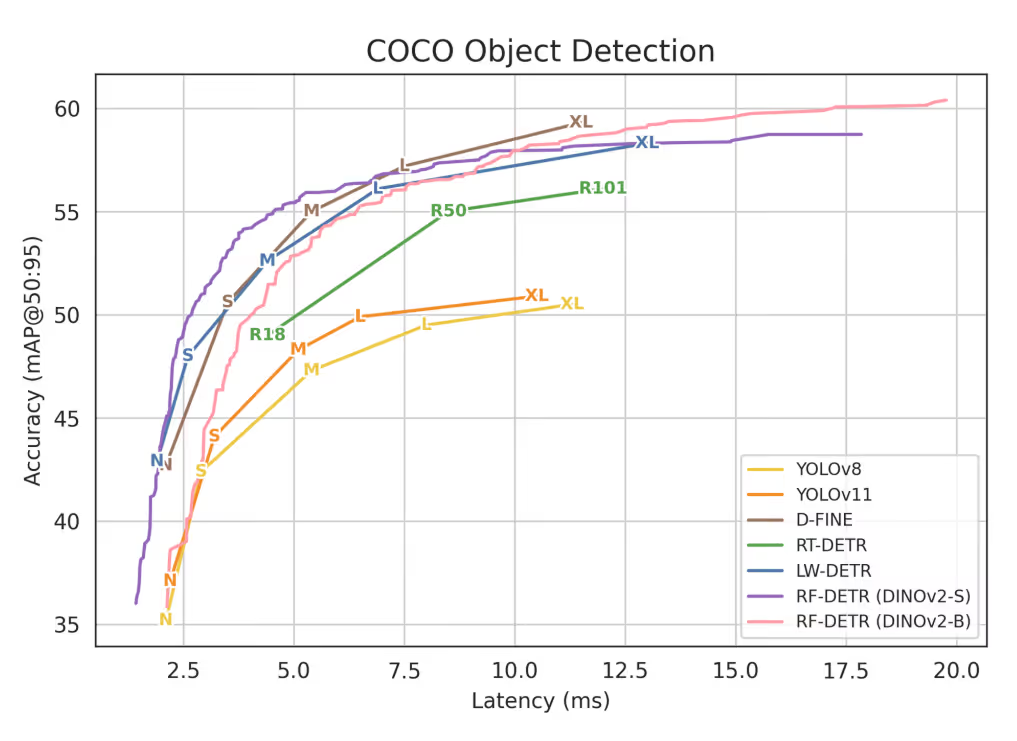
YOLOv8 is a computer vision model architecture developed by Ultralytics, the creators of YOLOv5. You can deploy YOLOv8 models on a wide range of devices, including NVIDIA Jetson, NVIDIA GPUs, and macOS systems with Roboflow Inference, an open source Python package for running vision models.
Gurdeep Raj’s Advanced Physical Chemistry (often found cited in academic settings and by students preparing for advanced university exams) is a compact yet ambitious textbook that aims to bridge foundational physical chemistry with the mathematical and conceptual tools needed for higher-level study. Below I outline its scope, strengths, pedagogical approach, typical audience, and some critical perspectives to provoke deeper thought about how it fits into modern chemical education.
You can train a YOLOv8 model using the Ultralytics command line interface.
To train a model, install Ultralytics:
Then, use the following command to train your model:
Replace data with the name of your YOLOv8-formatted dataset. Learn more about the YOLOv8 format.
You can then test your model on images in your test dataset with the following command:
Once you have a model, you can deploy it with Roboflow.
YOLOv8 comes with both architectural and developer experience improvements.
Compared to YOLOv8's predecessor, YOLOv5, YOLOv8 comes with: advanced physical chemistry by gurdeep raj pdf
Furthermore, YOLOv8 comes with changes to improve developer experience with the model. advanced physical chemistry by gurdeep raj pdf