Pearson PTE Test vs IELTS & TOEFL and their difrences
There are three major English proficiency tests, IELTS, TOEFL, and PTE. Here we are comparing the most popular English language tests.
Read moreImprove your communicative and time management skills in PTE exam with more than 10000 recent and repeated questions in a simulated format of the exam
Free PracticeAchieve your desired score for your upcoming PTE Exam!! Scored Pte Mock Test will help you check your current PTE score level and identify your weaknesses.
Take PTE Mock testConsult with our PTE experts to identify your weaknesses, analyze your score and make a precise plan to start your journey to success
Read moreFollow These Tips to Improve Your PTE-A Speaking Score
Last month PTE real questions collected by test takers all around the world.
New versions of materials in all skills released continuously- available all materials for free.
Practice like in the original test format and improve your score to get +65, +79, or perfect 90.
✔ FREE Standard Mock Test
✔ FREE Optional Mock Test
✔ Simulate Pearson scoring engines
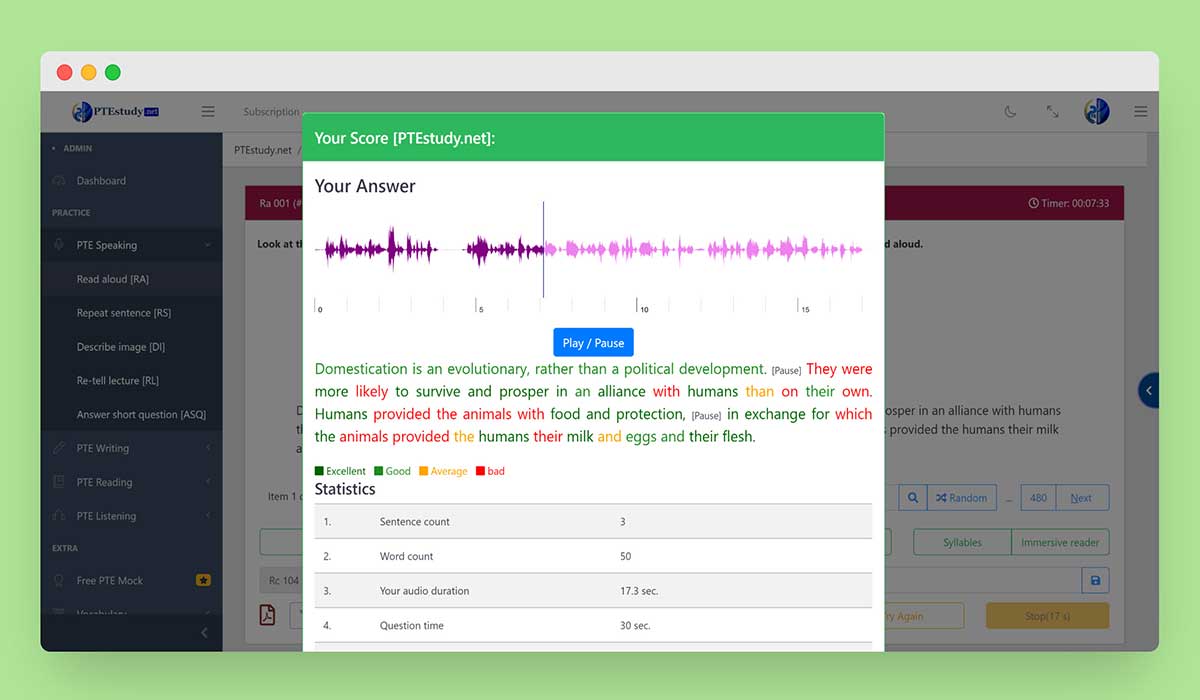
AI scoring engine gives Results according to audio responses in terms of content, pronunciation, and fluency.
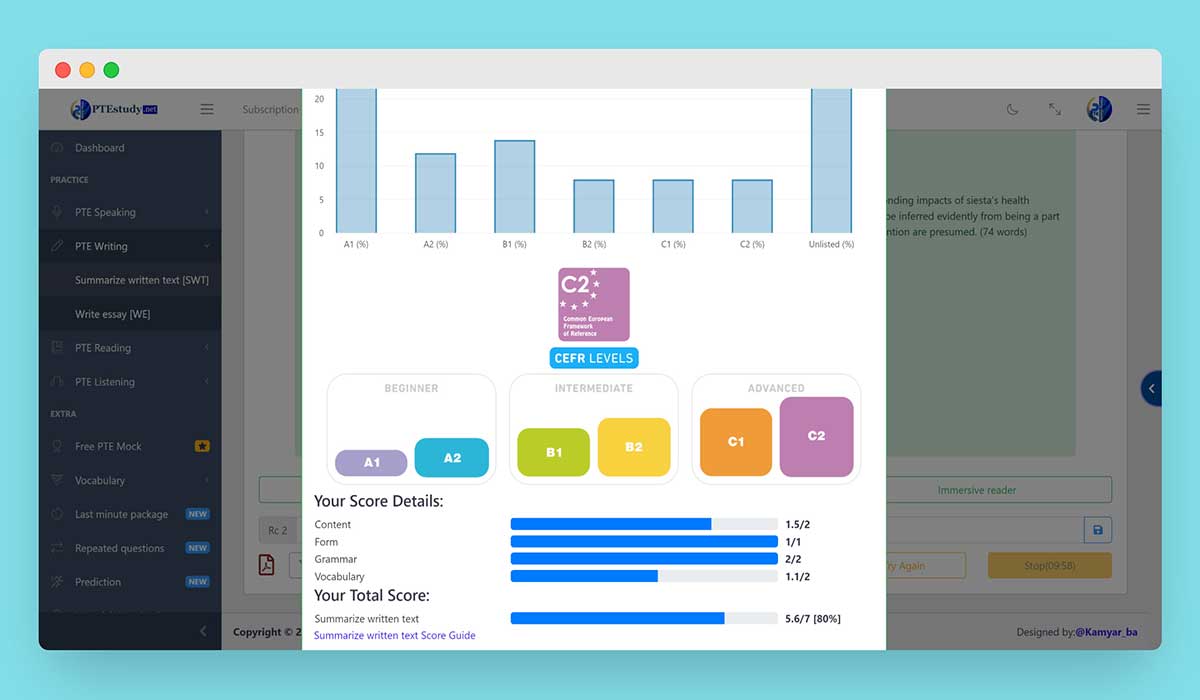
AI scoring engine gives results such as content, form, grammar, spelling, vocabulary range, general linguistic range, and development structure and coherence
We help candidates just like you to feel confident in PTE language exam, even if they’ve only just started learning. We have provided a platform for online practice and gathered real and repeated questions.
Simulate Pearson scoring engines
View Practice Score and Answer Explanations
Evaluate speaking pronunciation and fluency
Check writing grammar and spelling
Weekly Performance evaluation

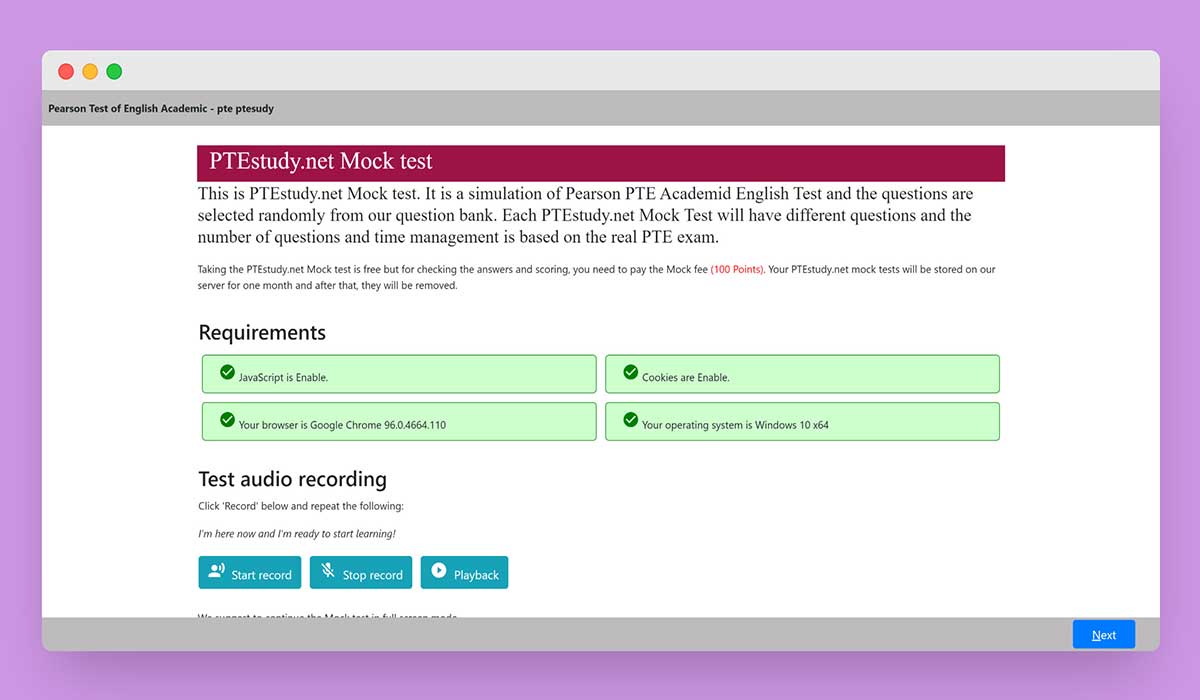

There are three major English proficiency tests, IELTS, TOEFL, and PTE. Here we are comparing the most popular English language tests.
Read more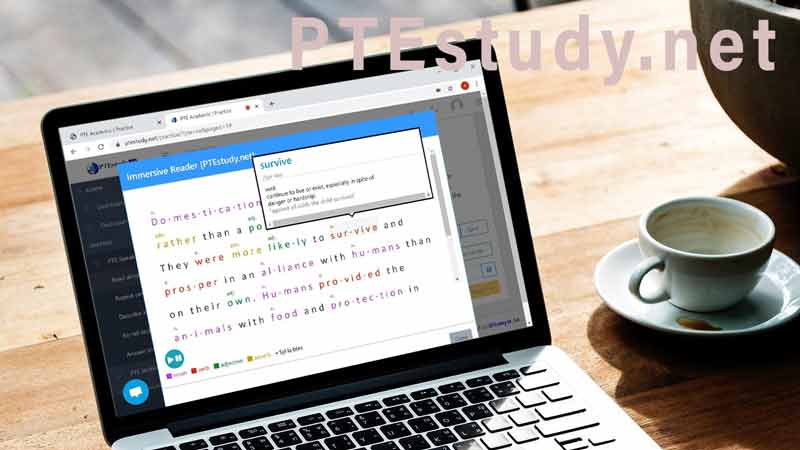
Best Tips to help you score 79+ in all sections of PTE! All you need is to keep on practicing for the sections in which you are weak.
Read more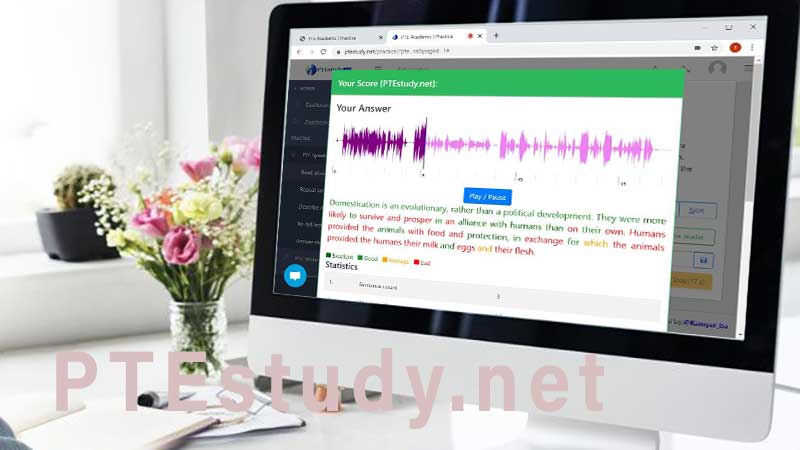
PTE Exam format will divide the test into three parts which are listening, reading, and writing & speaking.
Read moreLegal questions circled like wary drones. The rights holders issued periodic claims; platforms forwarded removal requests. The archive responded through a policy of documented negotiation: when material was bound by enforceable restrictions, it was sequestered behind controlled‑access provisions with clear rationales and takedown records preserved for posterity. When content was restored after dispute, the archive maintained the institutional memory of the conflict. Legal friction became an added layer of the record, turning takedown notices and license clarifications into data: evidence of how law shapes cultural transmission.
Yet preservation is never neutral. Tensions surfaced around curation choices: which versions to prioritize in the public interface, how to label fan edits that incorporated external footage, and whether algorithmic recommendation should surface the canonical film or its most memetically active derivatives. Some argued for strict fidelity—holding a high-bitrate, studio-authorized transfer as the reference object. Others pushed for pluralism: a gallery highlighting corrupted streams, compression artifacts, and machine-generated parodies to reflect the film’s lived history. The archive resolved to adopt a layered presentation: a primary, verified master accompanied by a curated exhibition of variants, each entry annotated with provenance and commentary. This compromise embodied a foundational archival ethic—respect for origin, coupled with an honest account of use. bee movie internet archive
The film’s memetic afterlife owed much to replication dynamics. Volunteers re-encoded the film at varying bitrates, recompressed it into glitched artifacts, trimmed it into looping GIFs, and recited it via voicebots. Mirrors proliferated—some faithful, some corrupted—and each variant accumulated its own provenance trail. Archivists, mindful of both legal frameworks and the archive's mission, maintained version histories: a ledger of changes, timestamps, and the actors who introduced them. Where copyright posed obstacles, the archive annotated claims and takedown notices rather than erasing history; to excise controversy, they believed, is to impoverish future inquiry. Legal questions circled like wary drones
Once ingested, Bee Movie's file began to participate in the archive's ecology. Researchers queried transcripts to extract lines that, when isolated, gained an uncanny autonomy. "According to all known laws of aviation..."—detached from scene and tone—was set loose in comment threads, pasted into code repositories, threaded into patches of machine-generated text. The archive's interface afforded programmatic access: an API returned timestamps and dialogue segments to curious scalers who wanted to recombine them, to test language models, or to create a mosaic of repetition. Each derivative was logged, when possible, with pointers back to the canonical file. When content was restored after dispute, the archive