Hsmmaelstrom -
There’s poetry in the topology. Nodes appear as constellations on mapping pages: icons pulsing to show latency, links thickening with traffic, clusters forming in neighborhoods like barnacles on a pier. During storms or outages, when corporate fiber and cell towers flinch, these meshes hum. Local chat servers, file caches, emergency bulletin boards, and VoIP bridges keep local communities talking. For activists and neighbors alike, that continuity is liberation: autonomy from surveillance-prone infrastructures, resilience against single-vendor failures, and the thrill of direct digital adjacency.
HSMMaelstrom
HSMMaelstrom arrives like a rumor in the wires—half myth, half engineering, wholly irresistible. It’s an electric cyclone of hobbyist ingenuity and networked defiance: a grassroots matrix of high-speed amateur radio that turns quiet suburban roofs and basements into nodes of a covert, resilient internet. Where commercial networks obey corporate maps and centralized rules, HSMMaelstrom is a living topology that grows, reroutes, and heals itself according to the hands and wills of those who build it. HSMMaelstrom
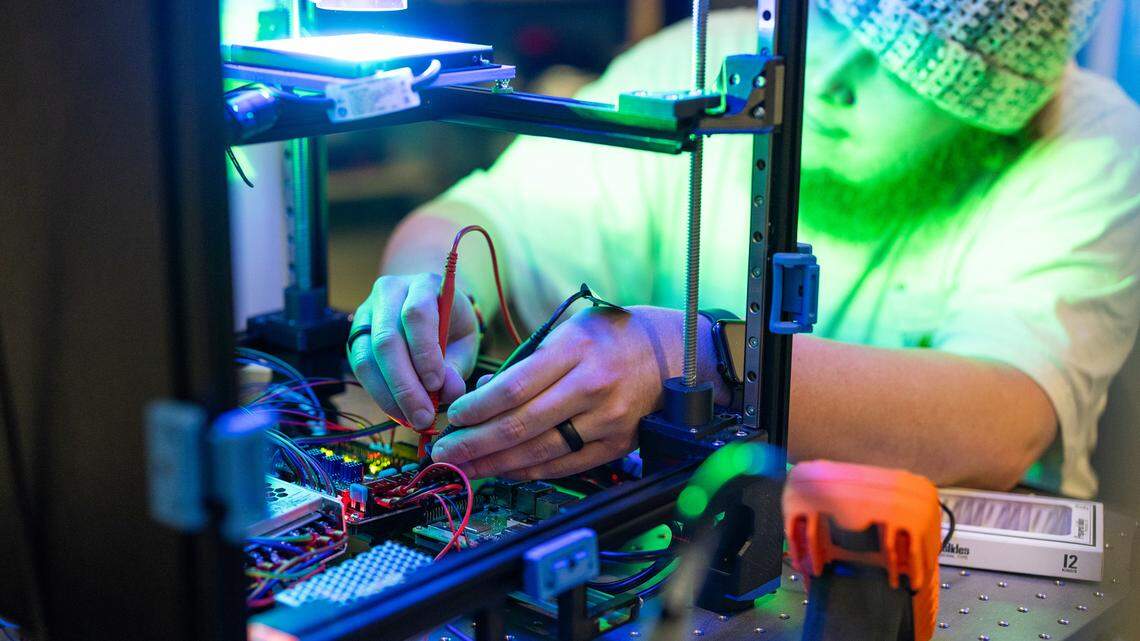
There’s an aesthetic to it, too: the scrawl of hand-drawn charts, terminal windows aglow with traceroutes, the smell of solder and rain on roof tiles. The network is tactile, not just virtual—cables routed through attics, masts climbed at dawn, signals negotiated over cups of coffee. It’s old-fashioned radio culture braided with modern networking, a bricolage that trusts curiosity over corporate polish. There’s poetry in the topology
At its heart is a simple idea made furious in execution: take off-the-shelf Wi‑Fi gear, reconfigure firmware and radios to operate on amateur bands, and stitch those radios together into mesh networks. Add open-source routing protocols, low-power routers scattered on poles and in attics, and a stubborn refusal to accept single points of failure. The result is not merely an alternative network—it's a social organism. People bond over channel assignments and antenna angles the way others bond over sports or music. Technical skill becomes civic capital; knowledge is the currency that keeps the maelstrom churning. Local chat servers, file caches, emergency bulletin boards,
For many participants, the project is also a manifesto. It asserts that networks can be meaningful public goods rather than rented utilities; that local autonomy and technical literacy are complementary forms of civic empowerment; and that resilience is worth building from the ground up. HSMMaelstrom communities run workshops to teach antenna construction, host nights to flash firmware and swap routing scripts, and assemble rapid-deployment kits for emergencies—portable routers, solar panels, and mesh-aware apps that can be carried into disaster zones.