
Welcome back!
Ready to check out?
You're just one click away from fantastic style and even better savings!
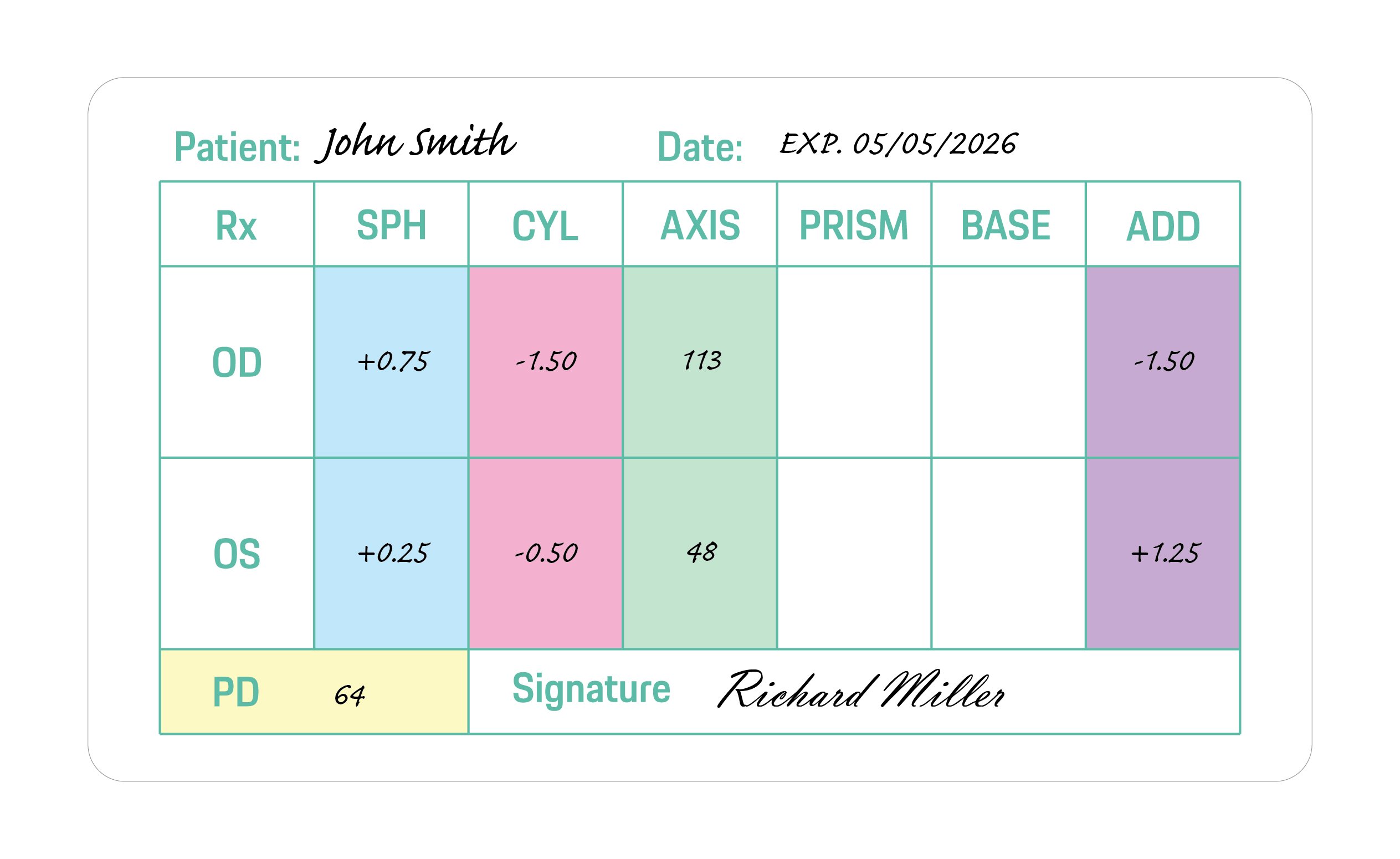
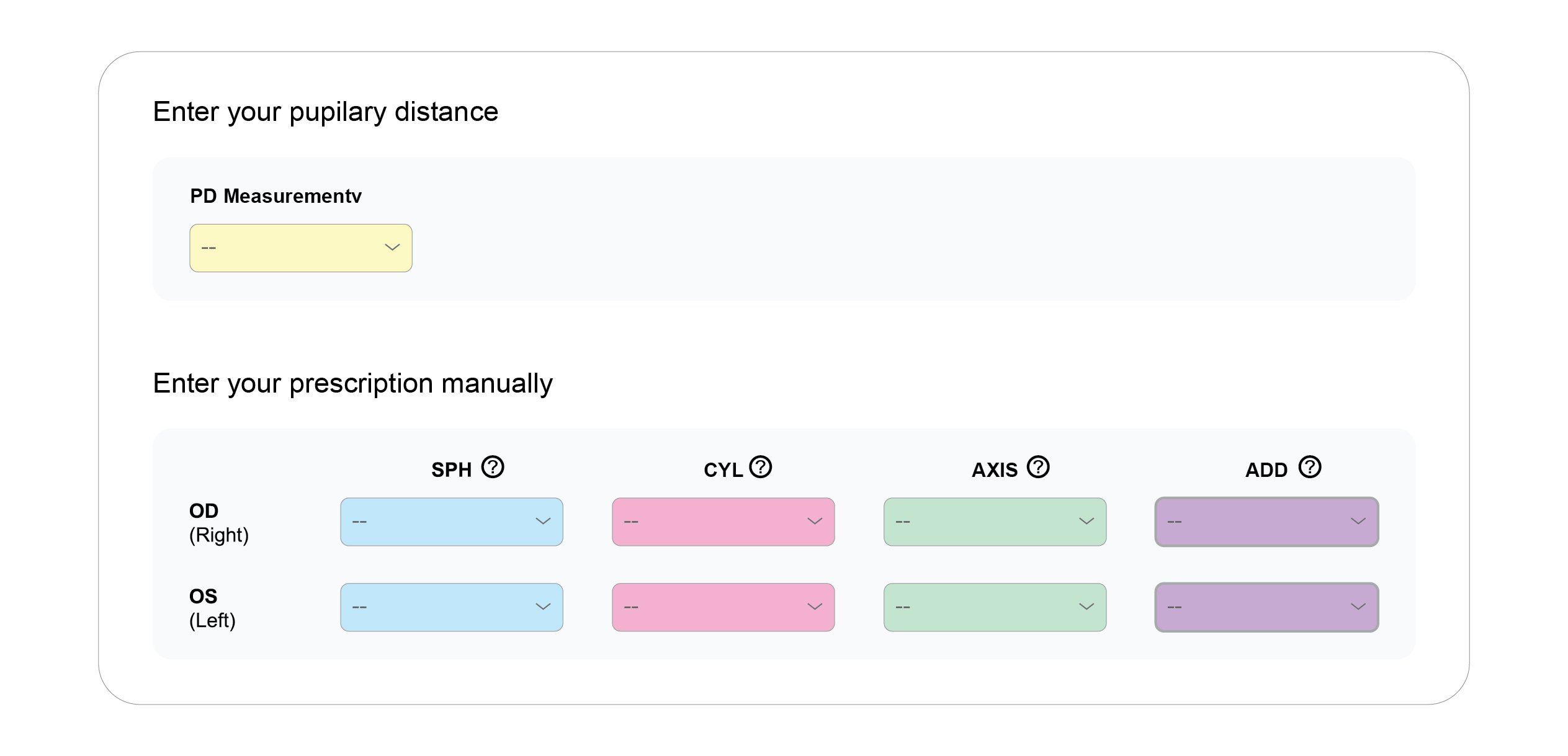
OD is an abbreviation for the Latin term oculus dexter which means right eye. Notice that the right eye information is asked for first even though we typically read from left to right.
OS is an abbreviation of the Latin oculus sinister which means left eye. That will be referenced on the far right column of the prescription.
SPH is short for sphere. The sphere of your prescription indicates the power on the lenses that is needed to see clearly. A plus (+) symbol indicates the eyeglass wearer is farsighted. A minus (-) symbol indicates that the eyeglass wearer is nearsighted.
CYL is short for cylinder. The cylinder indicates the lens power necessary to correct astigmatism. If the column has no value (is blank), it indicates that the eyeglass wearer does not have astigmatism. If this is the case on your prescription, you can leave it blank when entering it in.
AXIS is a prescription will include an axis value for those with astigmatism. This number represents the angle of the lens that shouldn't feature a cylinder power to help correct your astigmatism.
ADD is short for "additional correction." This is where details about bifocals, multifocal lenses or progressive lenses would appear.
The iMovie 10.2.5 DMG install represents a significant milestone in the evolution of video editing software. By providing a free, powerful, and accessible tool, Apple empowered creators to produce high-quality video content. The DMG file format, used for the installation of iMovie 10.2.5, showcases Apple's commitment to technical innovation and user experience. As video editing continues to play a vital role in modern media, iMovie 10.2.5 remains an important chapter in the history of video creation and editing.
The iMovie 10.2.5 DMG file is a disk image that contains the installation package for the software. When downloaded and mounted, the DMG file allows users to install iMovie on their Mac computer. The installation process is relatively straightforward, involving a simple drag-and-drop operation to transfer the iMovie application to the Applications folder. imovie 1025 dmg install
In 1999, Apple Inc. revolutionized the world of video editing with the introduction of iMovie, a free video editing software that came pre-installed on Mac computers. Fast forward to 2011, and iMovie had undergone significant transformations, with the release of iMovie 10.2.5, which came in a DMG (Disk Image) file format for installation. This essay provides an in-depth analysis of the iMovie 10.2.5 DMG install, exploring its significance, features, and impact on the world of video editing. The iMovie 10
iMovie's journey began as a simple, user-friendly video editing software that allowed Mac users to create and edit home movies. Over the years, Apple continued to update and refine iMovie, adding new features and capabilities. With the release of iMovie 10 in 2013, Apple transformed the software into a more professional-grade application, offering advanced features such as color correction, audio ducking, and 4K video support. The 10.2.5 update, released in 2016, further solidified iMovie's position as a powerful and accessible video editing tool. As video editing continues to play a vital
*Discount applied on the current website price at the time of order. Offer only valid for new customer first contacts order over $10. Maximum discount of $100. Cannot be combined with any other offers. Promotions are subject to change without notice. We reserve the right to cancel orders that are in breach of the terms and conditions of this offer.



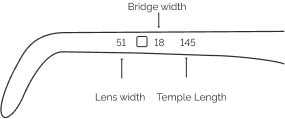
| Lens Width | Bridge Width | Temple Length | |
|---|---|---|---|
| XS | < 42 mm | < 16 mm | <=128 mm |
| S | 42 mm - 48 mm | 16 mm - 17 mm | 128 mm - 134 mm |
| M | 49 mm - 52 mm | 18 mm - 19 mm | 135 mm - 141 mm |
| L | >52 mm | >19 mm | >= 141 mm |
Buying eyewear should leave you happy and good-looking. Use our sizing tool to find frames that best fit your unique facial measurements.
Grab a regular card with a magnetic stripe on the back. Student IDs, credit cards and gift cards work well to start our online PD tool.
You may have received our paper PD measurement tool in your recent online order. In order to use this tool, place the ruler on your eyes so that the "0" lines up at the centre in between your eyes. Add up the two numbers, to get your PD. See example below:
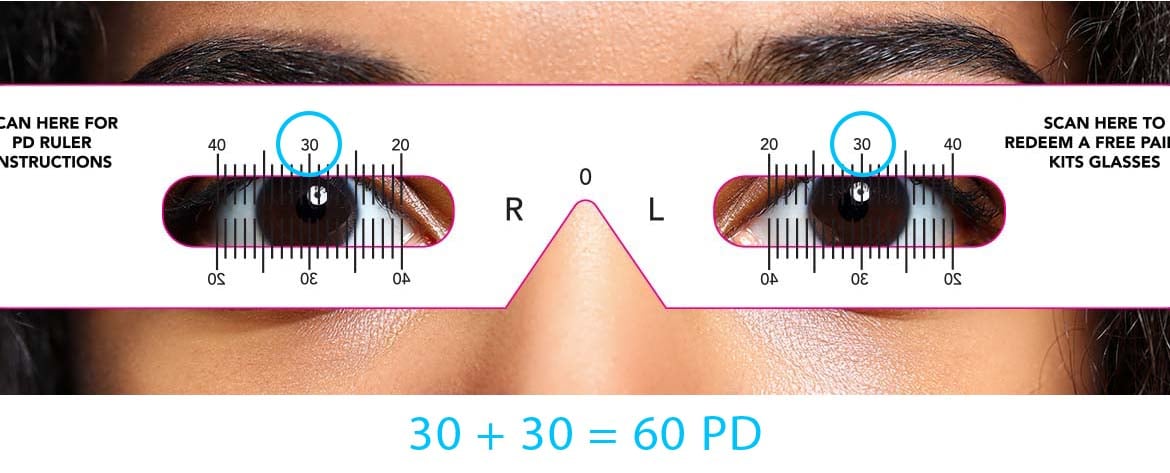
Click on this link to download and print your own PD measurement tool.
DOWNLOAD



 Check order status
 Place reorder
 Chat with us





 Use your insurance
 Help
Help